Mountain fortress chest guide
Gothic Remake Mountain Fortress Chest: Key, Bridge Route & Lockpick Checks
The mountain fortress chest combines three different problems: reaching the right side of the ruins, finding the correct key or access route, and identifying whether the chest is actually a live lockpicking puzzle. This guide separates those checks so you do not copy a solution for the wrong chest.
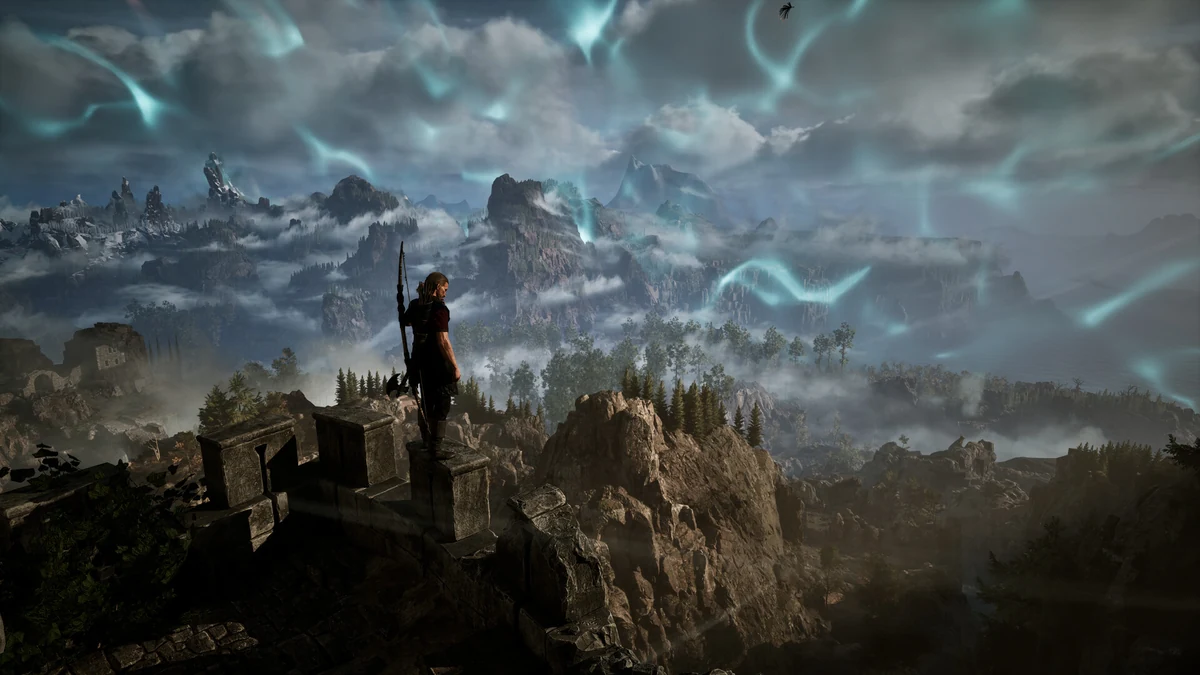
Quick answer: identify the bridge side before chasing the key
For the Gothic Remake mountain fortress chest, first confirm which fortress approach and which side of the broken bridge you are looking at. A chest that appears unreachable may be a route problem rather than a lock problem. Check the surrounding ledges, the upper fortress path, and the room or laboratory landmark before spending lockpicks or assuming that a community key location belongs to your chest.
If the chest opens into the linked-plate lock view, treat it as a live mechanism. Record the plate count and current holes, test one plate, and compare every reaction. If the lock view never appears, do not force a lockpicking sequence: continue checking the route, a key, an interaction state, or a nearby container. There is no responsible universal combination to publish without matching the visible state and game version.
Open the chest solverIdentify the Gothic Remake mountain fortress chest before opening it
The phrase mountain fortress chest can describe more than one object in a player report. Some searches refer to a chest at the top of the fortress, some to a container beyond a broken bridge, and some to an interior chest near a laboratory or library area. Those descriptions are useful clues, but they are not enough to prove that two players are looking at the same lock. Start by writing down the approach, the nearest room, the bridge or ledge landmark, and whether the interaction is a key prompt or a plate-lock prompt.
Use the official Steam media for broad environment recognition only. It can help confirm the game setting and the mountain-fortress visual language, but a store screenshot does not document the contents or lock state of an individual chest. For the actual object, compare the route and landmark in your game with a community map or guide, then keep the chest identity separate from the lock mechanism. This distinction is the main reason this page does not publish a guessed loot list or a single code.
Location, reward, and lock questions have different evidence requirements. A route clue can identify the area, but only the live interaction proves whether your chest expects a key, a plate mechanism, or another progression state.
Mountain fortress chest key and broken bridge checks
When players ask where the key for the mountain fortress chest is, the first useful answer is to verify the chest side and the route state. A key reported for a top-room chest may not apply to a chest visible across a bridge, and a bridge question may be about a jump, a detour, a gate, or a progression state rather than a missing item. Revisit the last stable landmark, look for a higher approach, and check whether the chest is meant to be opened from the same side where it is first seen.
Do not treat a broken bridge as proof that the chest is locked. Take a screenshot or short note of the exact approach, then compare the map route with the live scene. If the path ends at a visual gap, search for a switch, climbable edge, side passage, or alternate upper route before trying a key from another chest. If the route is clear but the interaction asks for a key, record the key clue separately from any lockpicking report.
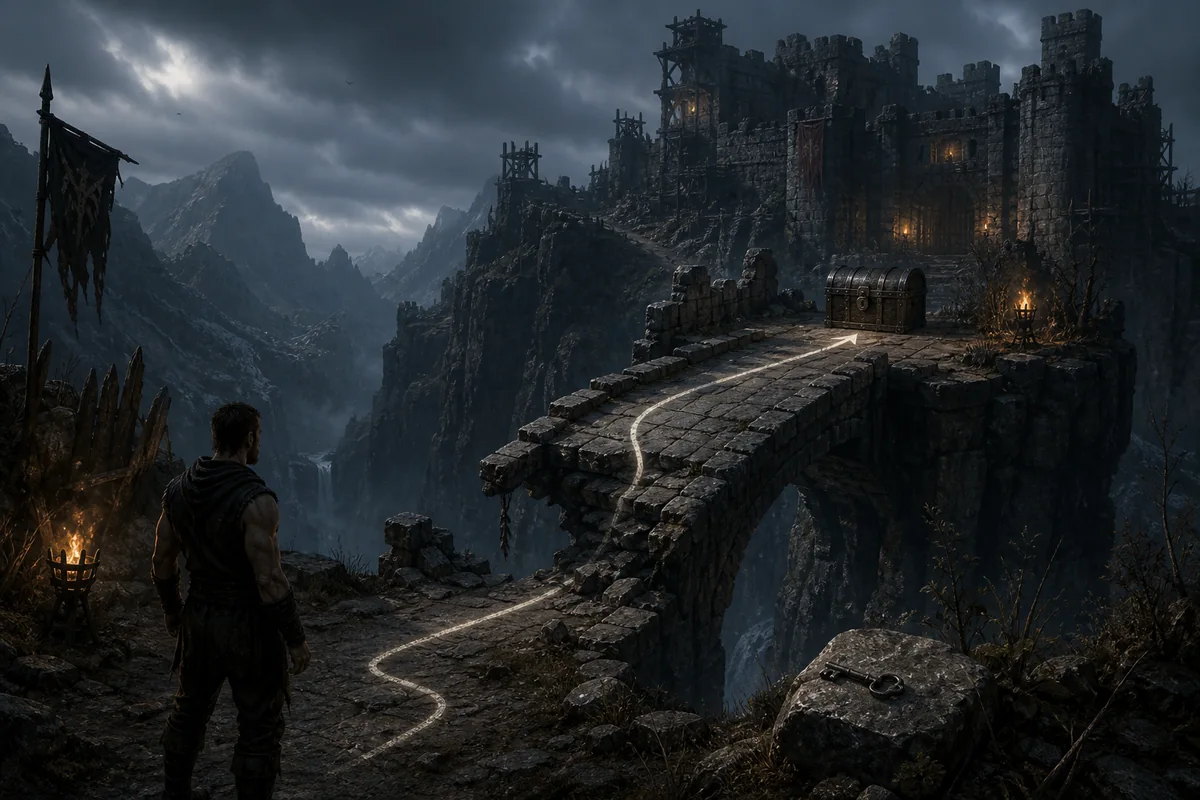
A four-step workflow for the mountain fortress chest route
Step one is location: name the fortress approach, the bridge or high ledge, and the nearest interior landmark. Step two is access: decide whether you are looking for a key, a route around the gap, or a normal interaction that has not triggered yet. Step three is identity: confirm the chest itself rather than a nearby container. Step four is mechanism: only after the lock view appears should you record plate positions or look for a known sequence.
This order prevents the most common failure mode in chest guides: a player finds a real answer for a different object and concludes that the game is broken. A route guide and a lock guide solve different layers. Use the interactive map or the existing chest-locations hub for area orientation, then use this page for the mountain-fortress decision tree, and finally move to the solver when the visible plates make the question mechanical rather than navigational.
Keep the first movement, the approach landmark, and the interaction prompt together in your notes. That small location fingerprint makes it easier to reject a guide that describes a nearby fortress container instead of the chest in front of you.
| What you see | First check | Next action |
|---|---|---|
| Chest beyond a gap | Approach, ledge, and bridge side | Find the route or alternate height before searching for a key |
| Key interaction prompt | Chest identity and key clue | Follow the key or progression route; do not copy a plate code |
| Linked plates appear | Plate count and current holes | Record one controlled reaction and use the solver if needed |
| Nearby guide does not match | First movement and landmark | Reset, remap, or switch to the correct named page |
| Reward is reported differently | Build, quest state, and chest identity | Treat loot as version-sensitive and avoid an absolute claim |
How to tell whether the chest needs a lockpick or a key
A key chest and a linked-plate chest create different evidence. A key prompt tells you that the missing information is access or progression. A plate lock gives you a current state that can be measured: visible plates, seven-hole tracks, and reactions when one active plate moves. The search phrase fortress chest lockpick is therefore a useful support term, but it should not make you assume every mountain fortress chest uses the same mechanism.
If you do see the plate interface, do not begin with a copied A or D chain. Note the current holes from back to front, make one safe test, and write down which plates moved with the active plate, against it, or not at all. If a known sequence fails on its first meaningful movement, stop. A mismatch at step one invalidates the later checkpoints because the solver state is no longer the state used by the guide.
The lockpick question is therefore a mechanism check, not proof of a location. Once the visible state is recorded, the chest solver can test a route from your observations; before that point, navigation and access evidence are more useful than a sequence copied from another chest.
| Interaction | What it proves | What it does not prove |
|---|---|---|
| Key prompt | This interaction expects an access item or state | That the visible chest is the one from another key report |
| Plate-lock prompt | The lock can be modeled from its current state | That a public route works on every build |
| No prompt or blocked interaction | The route or progression state may be incomplete | That the chest is permanently inaccessible |
| Different first reaction | The copied mechanism does not match | That your observation is useless; remap from a clean state |
Record the live lock before using the Gothic chest solver
For a live mountain fortress lock, write the plate count and the current hole for every plate before testing anything. Keep the order consistent with the solver, and do not combine observations from different reloads unless the starting vector is identical. Then move exactly one active plate once. Record every changed plate, including a change that moves in the opposite direction. A Same, Opposite, or None relationship is more useful than a guessed name for the chest because it describes the mechanism that the solver must model.
The browser solver is most useful when the chest is visible but the posted answer is ambiguous. It calculates from the entries shown, not from a hidden official database. That makes the result auditable: if the route fails, compare the expected next state with the game screen, find the first mismatch, and correct that observation. Read the broader lockpicking guide for plate conventions and the solutions page for worked examples, but keep this named chest's live state as the source of truth.
Save the observation record with the build or mod context when a result matters. A later comparison is only meaningful when the starting holes, direction convention, and first controlled test are known rather than reconstructed from memory.
Fortress side / landmark / access prompt / plate count / start holes / one-step reactions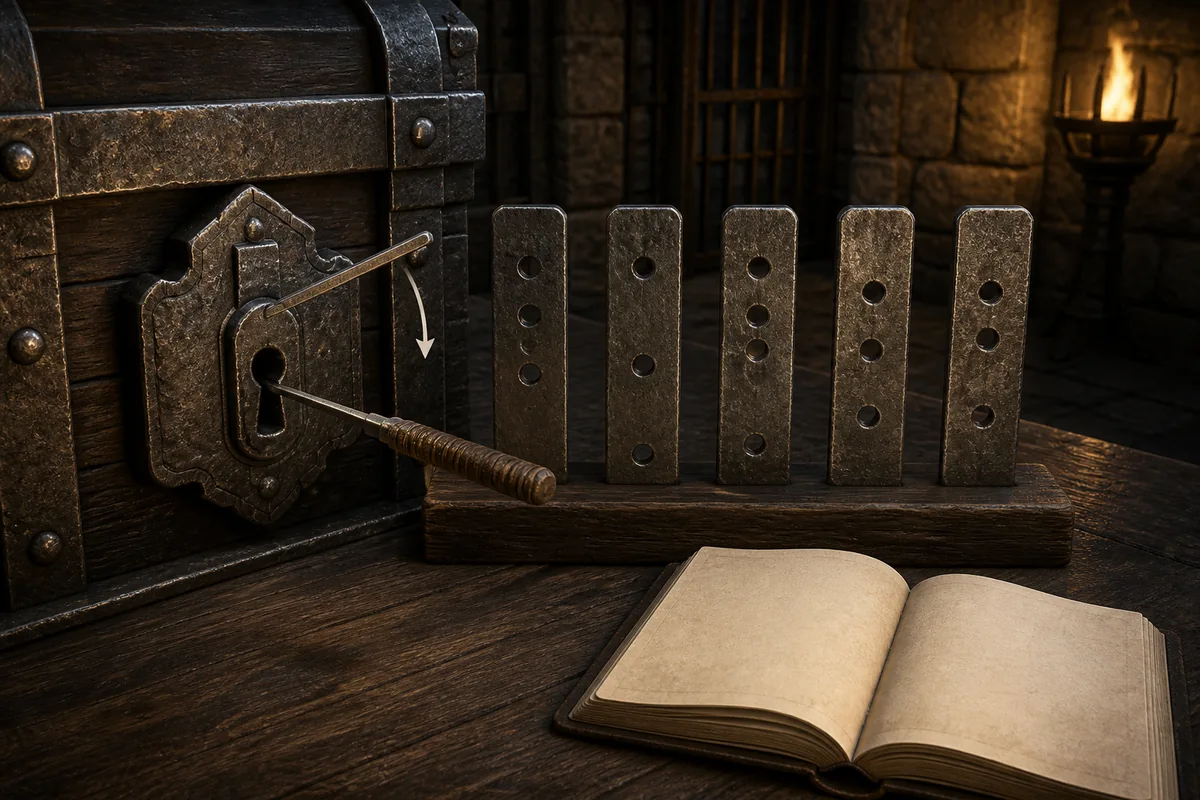
Why key, bridge, and reward reports can disagree
Community chest pages are often written from one playthrough, one patch, or one direction convention. A report can also combine two nearby containers because both are described as a fortress chest. Changes in quest state, skill state, mods, visual landmarks, or the meaning of left and right can make a route look contradictory even when each writer observed a real object. Treat the first movement, the access prompt, and the location fingerprint as verification fields rather than trusting a title alone.
The safest language for the reward question is conditional. If a source documents a particular chest and build, say that it reports a reward for that context. If the source only says that a chest exists near a bridge or laboratory, do not turn that into a guaranteed item list. The same caution applies to the phrase blood flow bow and similar long-tail reports: it is a lead for investigation, not evidence that every player will receive the same item.
Official media supplies setting context, while a live observation or a clearly scoped community report supplies chest-specific evidence. Keeping those sources separate makes future patch corrections more precise and prevents an environmental screenshot from being mistaken for proof of loot or lock behavior.
Mountain Fortress chest FAQ
Where is the key for the mountain fortress chest in Gothic Remake?
There is no single verified answer for every chest described that way. First identify the fortress side, bridge or upper-room landmark, and the exact container. Then follow a key clue that matches that identity. If the chest opens into linked plates instead of a key prompt, record the live lock rather than applying a key report from another object.
How do I get across the broken bridge to the mountain fortress chest?
Treat the broken bridge as a route puzzle first. Check the higher fortress approach, ledges, side passages, switches, and the side from which the chest is meant to be opened. A screenshot of the approach and a nearby landmark is more useful than a generic bridge answer because community reports may describe different gaps or chest sides.
Does the Gothic Remake mountain fortress chest have a fixed combination?
Do not assume that it does. A plate-lock route depends on the current hole vector and directional relationships, while a key chest is not solved by a plate sequence. Use a fixed route only when the plate count, starting state, first movement, and build context match your game; otherwise remap the visible lock.
When should I use the Gothic chest solver for this fortress chest?
Use the solver after the chest is identified and the linked-plate interface is visible. Enter the current holes, test one active plate, and record Same, Opposite, or None reactions. Use the map or chest-locations guide for navigation, and use the lockpicking guide for the general mechanic.
Why does a mountain fortress chest guide mention a key while my chest needs lockpicking?
The location label may be grouping nearby containers or different progression states. Compare the exact room, bridge side, chest appearance, interaction prompt, and plate count. A key report and a live lock report should not be merged unless those fingerprints match.
Can I trust a reported mountain fortress chest reward?
Only within the source's documented context. Rewards can be sensitive to chest identity, quest state, version, or a mistaken nearby-container label. Use the report as a lead, but do not treat an unverified item list as a guaranteed result for every playthrough.
Is this an official Gothic Remake mountain fortress chest guide?
No. This is an independent fan-made guide. The official Steam page is used for broad game context and media attribution, while chest location and lock behavior are separated into observations that should be checked against the live game state.
Summary
For the Gothic Remake mountain fortress chest, solve the right problem in the right order: identify the chest, check the key or broken-bridge route, and only then inspect the lock mechanism. This prevents a real answer for a different fortress container from becoming a misleading fixed code.
When linked plates appear, the current live state outranks a copied title. Record the holes, test one plate, compare every reaction, and send a mismatch to the Gothic chest solver. Keep reward claims conditional because official game media does not document individual chest contents.
Use the chest-locations hub for broad routing, the interactive map for area orientation, the lockpicking guide for plate conventions, and the solutions page for worked examples. This page adds the mountain-fortress key, bridge, and lock decision layer between those resources.
Sources and verification
- Official Gothic 1 Remake Steam pageOfficial game context and mountain environment media checked on August 15, 2026; the page does not document this individual chest.
- Gothic.Tools lockpicking and chest referenceCommunity reference used for general lockpicking and chest-solution structure, not as proof of a universal fortress code.