Old Mine guide
Gothic 1 Remake Old Mine: 5 Chest and Key Checks Before Lockpicking
Use this Old Mine guide to decide whether you need a route, a key clue, a named chest note, or the live lockpick solver before you waste lockpicks in Gothic 1 Remake.
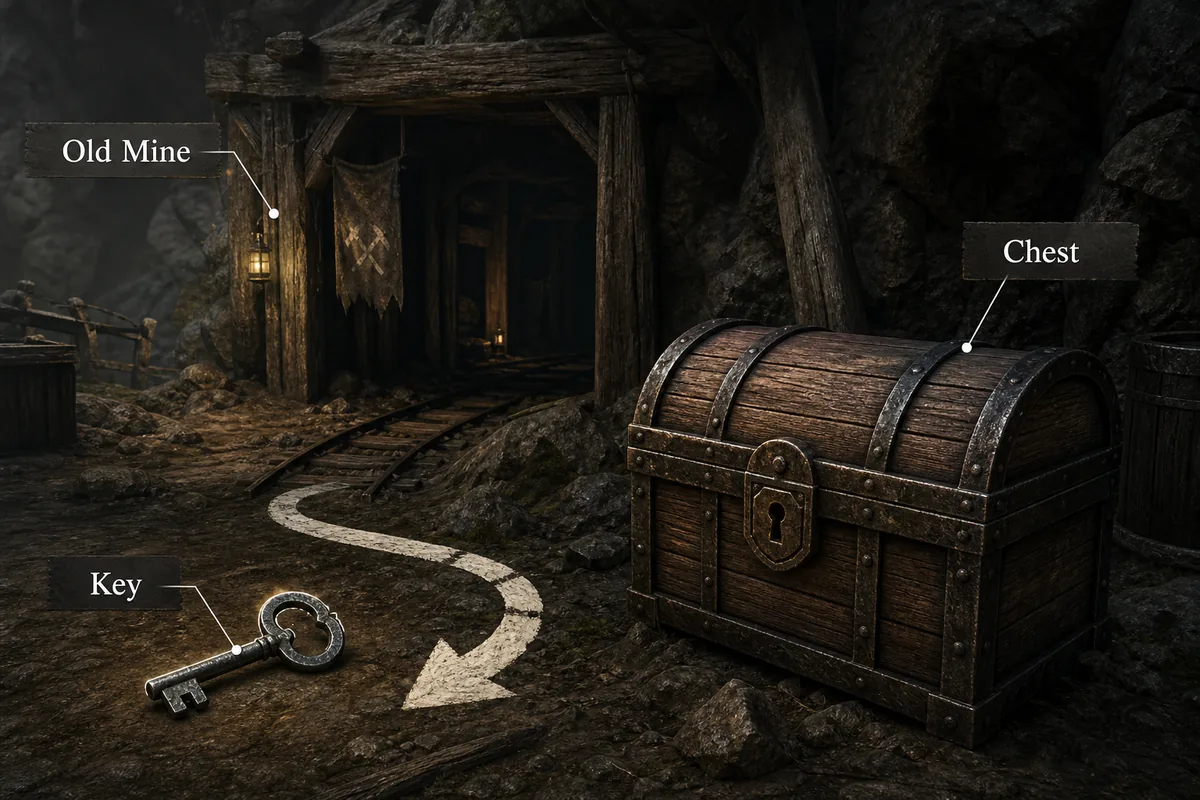
Quick answer: identify the mine problem before trying the lock
Most Gothic 1 Remake Old Mine searches are not asking for one universal chest code. They mix four jobs: finding the Old Mine or Abandoned Mine route, checking whether a key or quest step gates the area, identifying a specific chest, and solving the lock that appears once the chest is open.
Start by writing down the mine name, nearby landmark, chapter or quest step, visible plate count, and the first safe movement. If the chest is listed in a guide and the first movement matches, use that sequence. If any of those checks disagree, reload and map the current lock in the solver instead of forcing a copied answer.
Open the chest solverGothic 1 Remake Old Mine searches mix route, key, and chest intent
The useful first decision is whether the player is stuck outside the mine, inside the mine, or already looking at a lock. A route problem needs a map or location clue. A key problem needs the quest or door context. A chest problem needs the exact container. A lockpicking problem needs plate positions and reaction data.
That distinction matters because Gothic 1 Remake chest pages often rank for nearby but different searches. The current site already has strong pages for Silas, Scatty, Lares, underwater chests, and broad chest locations. Old Mine deserves a separate guide only when it keeps the mine-key-chest workflow together without replacing those pages.
The 5 Old Mine checks to run before lockpicking
Do these checks in order. They are deliberately practical, because the fastest way to lose lockpicks is to copy a sequence meant for a different mine chest, a different direction convention, or a different patch state.
If a fixed answer exists, the first movement should behave as predicted. If it does not, stop immediately. Continuing after a mismatch gives you a new unknown state, not better evidence.
| Check | What to record | Why it matters |
|---|---|---|
| Mine identity | Old Mine, Abandoned Mine, Free Mine, or another translated name | Guides and maps may use different labels for nearby mine areas. |
| Access gate | Door, quest, chapter, NPC, or key clue | A key search can be about reaching the area rather than opening a chest. |
| Chest identity | Room, map marker, owner, reward clue, and whether it is underwater | A named chest route should not be reused for a similar container. |
| Lock state | Plate count and start holes from back to front | The solver needs the visible state, not a memory of an earlier test. |
| First movement | One controlled A or D input and every plate reaction | It proves whether a published sequence matches your save. |
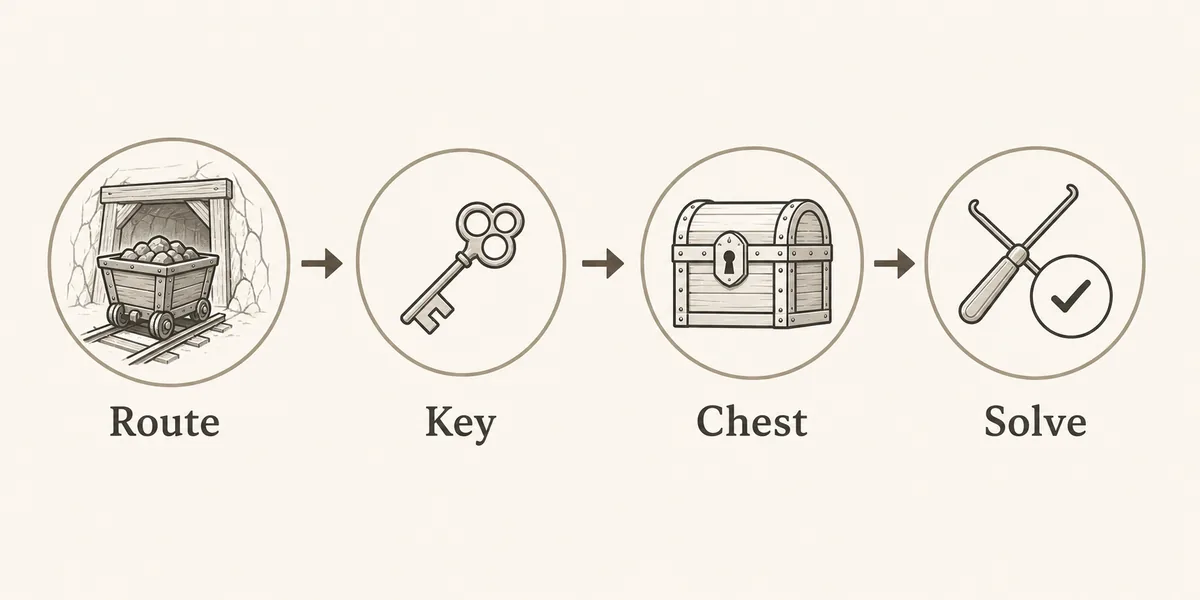
Route, key, chest, solve: the safe Old Mine flow
Use a map or route guide to reach the mine. Use a key or quest note only when the blocker is a door, gate, or NPC step. Use a chest guide when the container is named clearly enough to verify. Use the solver when the visible lock is the only reliable source.
This order keeps search intent clean. A broad Gothic 1 Remake Old Mine page should not pretend to know every lock. Its job is to move the player to the right next action and prevent a wrong fixed sequence from becoming a longer mistake.
Which Gothic 1 Remake chest page should you use?
The table below keeps this Old Mine guide from cannibalizing existing pages. Use the most specific page that matches the searcher's real problem. If the problem is only a generic mine search, stay on this page long enough to classify it; if the problem is a known named chest, move to the matching guide.
For German queries such as Verlassene Mine Truhe or Bergfestung Truhe, treat the wording as location evidence first. The exact chest still needs a room, marker, or first movement before a route should be trusted.
| Search clue | Best page or action | Reason |
|---|---|---|
| Gothic 1 Remake Old Mine | This Old Mine guide | The user likely needs route, key, and chest triage. |
| Gothic Remake mine key | This page first, then source-specific guide | Key intent may mean access, not chest lockpicking. |
| Underwater chest / Abandoned Mine underwater report | Underwater chest combinations | Submerged chest reports need location separation. |
| Silas flooded basement chest | Silas guide | A protected named chest with its own route and checkpoints. |
| Unknown Old Mine chest lock | Chest solver | The live plate state is more reliable than a copied sequence. |
How to record an Old Mine chest lock for the solver
Once the lock interface is open, stop thinking in place names and start recording the mechanism. Number plates from back to front, record every current hole, then test one selected plate exactly once. Compare the before and after state. A plate that moves with the selected plate is Same; a plate that moves the other way is Opposite; an unmoved plate is None.
Reload or return to a known state between tests when possible. If you perform extra inputs after a failed sequence, the solver can still help, but only after you update the full current state. Old information from a previous start vector should not be mixed with a new lock position.
Mine / room / plate count / start holes / first reaction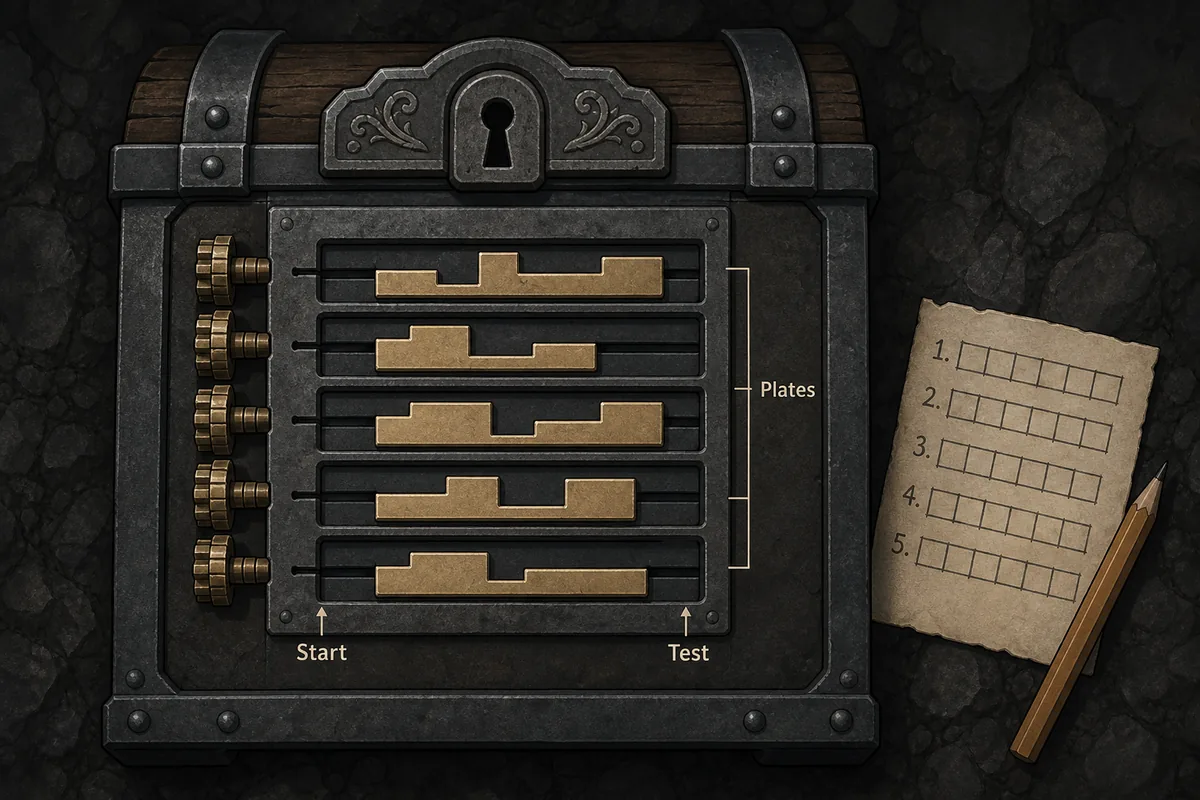
Source checks and limits for Old Mine chest claims
Official game pages confirm the game context, not every individual chest. Maps and community guides are useful for location clues, while lock databases and player reports are useful only when they show plate count, direction convention, and a verifiable first movement. Treat incomplete sequences as leads, not facts.
The information gain on this page is the decision framework: it separates mine access intent from chest-solving intent, documents when to switch to the solver, and links related existing guides instead of repeating every known sequence in a broad page.
When two sources disagree, keep the one that names the mine area, access condition, chest room, plate count, and first movement. A bare left-right string without those checks is not enough evidence for a fresh save.
For player notes, record the source date and patch context when available. Gothic 1 Remake search results can mix demo builds, early access notes, community spreadsheets, and current guide pages, so the safest advice is to verify the visible lock before spending lockpicks.
If you plan to share a route with another player, include the route clue and the first failed or successful input. That makes the report useful even when the exact reward or lock order changes later.
This page intentionally avoids listing every rumored mine chest reward. Rewards can shift across reports, while the route-key-chest-solver workflow remains useful even when the exact loot table is uncertain.
Old Mine chests FAQ
Is there one Gothic 1 Remake Old Mine chest code?
No. Old Mine searches mix route, key, chest, and lock intent. A fixed code is safe only when the exact chest and first movement match your save.
What should I check before using a mine chest sequence?
Confirm the mine label, access gate, chest location, plate count, start holes, and first movement. If one check fails, use the solver.
Does Gothic Remake mine key mean a chest key?
Not always. It can mean a route gate, quest item, Steam key search, or a chest-related clue. Read the surrounding context before treating it as lockpicking intent.
How is this different from the chest locations guide?
The chest locations guide is broad. This page focuses on Old Mine and Abandoned Mine style queries, especially mine keys, mine chests, and when to stop copying a sequence.
When should I open the Gothic chest solver?
Open it when the lock is visible and you can record plate positions. The solver cannot identify a mine route, but it can solve the mechanism on your screen.
Are the images official Gothic 1 Remake screenshots?
No. They are AI-generated editorial illustrations. The actual guidance is provided as crawlable text, tables, and links.
Summary
For Gothic 1 Remake Old Mine searches, first classify the problem: route, key, chest identity, or lock mechanism. That prevents a broad mine query from being answered with the wrong chest sequence.
If the chest is known and the first movement matches, a fixed guide can save time. If the lock differs, record the live state and use the solver.
Before you trust a copied sequence, compare the mine label, access condition, chest room, plate count, and first movement. Those five details are more useful than a longer unverified list of left and right inputs.
Sources and verification
- Official Gothic 1 Remake Steam pageOfficial game and publisher context checked on July 28, 2026.
- Gothic 1 Remake interactive mapMap-style source for route and location verification.
- Gothic.Tools lockpicking referenceCommunity reference for lockpicking terminology and chest-solution patterns.
- Steam Community discussionsCommunity reports treated as leads, not official chest data.